Top 10 Strategies For Reporting And Documenting PAT in Derby
The documentation and reporting produced through Portable Appliance Testing (PAT) is tangible proof that a dutyholder is in conformity with the Electricity at Work Regulations of 1989. While the actual test is essential however, it's the paperwork that proves the duty of care towards Health and Safety Executive (HSE) inspectors, insurance assessors, and auditors. Documentation is the initial protection when there is an accident involving electronic equipment. It proves that the system was kept in line with the requirements of risk. The IET Code of Practice defines what constitutes a sufficient record. It goes beyond the simple pass/fail certificates to include detailed asset registrations, risk assessments, and certification of conformity. The proper documentation isn't just an administrative necessity and is a vital part of the safety processes. It permits trend analysis and helps inform future assessments.
1. The PAT Testing Certificate (Report of Testing and Inspection) in Derby
This is the primary output after a test. It must be a comprehensive report, not a short report. A certified certificate must contain the following information data: the name of the company, details about the company, and qualifications of the testers, date of testing, address of the facility, list of appliances test, (with their unique identification number), results of the tests (visual examination and electronic tests) and the status of pass or fail for each item, as well as the date recommended for the next inspection. The certificate must be signed and dated by the person who is responsible for the work.
2. The Asset Register as the Foundation of Documentation
The asset log is the record that keeps track of the lifecycles of portable appliances. It must be a thorough log containing, at a minimum, a unique asset ID number (matching the physical label of the appliance) as well as a detailed description of the item and its Derby, as well as the classification (Class I/II) and kind (e.g. IT, handheld, stationary) and model, manufacturer and serial number. A good register includes a record of every test, date, and remedial measures that were taken. This will provide a comprehensive review of every asset.
3. Report of failed appliance and corrective action documentation in Derby
It's not enough just to document a failure. Documentation is essential to clearly trace the entire lifecycle a problem. It must include a failed appliance report that describes the nature of the problem (e.g. : "failed Earth Bond Test: 1.8O") as well the action taken right away (e.g. : "item labeled FAIL, removed and disconnected") as well as an account of how the repair or disposal procedure was approved. Once remedied, the documentation must include the retest results as well as the date that the item was returned to service, closing the loop, and proving that the risk was properly managed.
4. Labels and Asset Identification
Labels on appliances are vital to the system of documentation. Each label should be robust, not metallic, and nonconductive. It should clearly show an asset ID that is unique as well as a date for testing, the tester’s ID (or the company name) and the date of the next inspection (or the re-test date). The label should provide a prompt visual indication of the status of compliance for both inspectors and users. The information on the label must exactly match the information on the asset registry and the certificate.
5. Risk Assessment Documentation
It is necessary to document the risk assessment prior to deciding the frequency and type of tests should be conducted. The report is the foundation of PAT documentation. The report should provide the results of the assessment which include the kind of equipment, environments where they are used as well as the proficiency of the users and the rationale behind the intervals chosen for inspection and testing. This document should explain why high-risk products should be placed in a more extensive testing schedule, demonstrating a smart, risk-based approach rather than the blanket approach of a non-substantiated policy.
6. Evidence of Competence and insurance in Derby
The documentation must include proof of the tester's expertise. This should include documents proving the qualifications (e.g., City & Guilds 2377) and proof that the tester's insurance policy for public liability is current. Although it's not a direct record of the test, the accompanying documentation is crucial as it validates everything. It shows an enforcement authority that the duty holder has taken reasonable steps to choose the right person to be a part of the process.
7. Certificates of calibration for Test Equipment
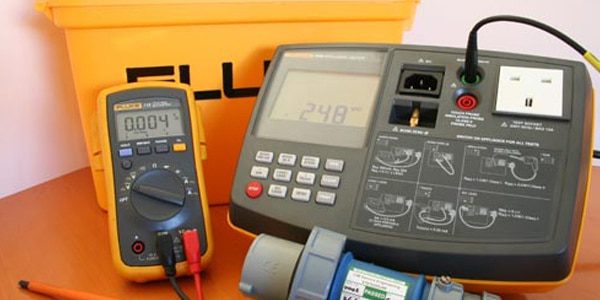
The reliability of the PAT test relies on the authenticity of the test results. The documentation must include a valid certificate of calibration from an UKAS accredited laboratory for every testing equipment used. This certification, which is usually renewed every year, shows that the measurements of the instrument were traceable to national standards at testing time which confirms the reliability and accuracy of the pass/fail decisions that were made.
8. Digital Reporting Systems and Online Portals
Digital management has become the standard industry practice. Many providers provide online customer portals. The portal gives duty holders 24/7 access to their asset register as well as the ability to download and print certificates. It's superior to paper systems since it prevents loss, makes it easy for audits and provides the security of a permanent record. It's a sign a provider is professional if they have an electronic system like this.
9. Long-Term Records Storage and Data Security
It's unclear what the time frame statutory is for PAT records. But under civil law you may file claims up to three year. Prudent practice is to retain the full documentation–including certificates, asset registers, and risk assessments–for at least the lifespan of the appliance or for a minimum of 5-7 years. Documents must be kept safely, whether physically filed platforms or in digital ones to safeguard information and ensure that it is available for the time period.
10. Documentation plays a role in Auditing and Enforcement in Derby
Documentation is required in any HSE inspections, insurance audits, or electrical incidents. The evidence is needed to demonstrate the care duty has been fulfilled. Incorrect or incomplete documentation can cause enforcement actions, invalidated insurance claims and, in the worst situations, prosecution. Documentation isn't just about maintaining records, it's an essential part of a company's legal defense. Follow the best Derby electrical equipment testing for site advice.
Top 10 Tips For The Subject Of Fire Extinguisher Service Certification And Qualifications in Derby
The UK fire extinguisher industry is controlled by a strict framework, designed to ensure safety, compliance and competence. In contrast to some professions that require state-issued licenses, the burden is on the "Responsible person" (under the Regulatory Reform (Fire Safety) Order 2005) to select a competent service provider. Knowing the distinctions between certificates and qualifications is not just technical, but also a crucial part of due diligence. In a market that is overcrowded with a myriad of service providers, from highly accredited companies to private operators, it's essential to know what qualifications refer to and their importance. When selecting a technician or a company, without the correct qualifications, you could cause your insurance to be invalidated and not meet your legal obligations. The most important thing is that it can put your premises, as well as the people who live there vulnerable. This guide outlines the top 10 certifications, qualifications and factors to be considered when selecting an insurance company that is a fire safety partner.
1. The Gold Standard of Third-Party Certification Accredited by UKAS (BAFESP101)
The single most important certification to be looking for is a company's membership to the BAFE SP101 scheme. BAFE (British Approvals for Fire Equipment) is an independent registration authority, is the most important certification to look for. SP101 is the only scheme designed for portable extinguishers. The UKAS accreditation is a key factor. This means that the scheme has been rigorously evaluated against international standards. A BAFE-SP101 certified certificate that has been accredited by UKAS provides the most convincing evidence of a company's competence. It verifies that the company's workers, techniques equipment, as well as quality management systems are regularly audited to ensure compliance with British Standards.
2. The Alternative Benchmark: FIRAS Certification
FIRAS (Fire Industry Association Recognition and Accreditation Scheme) which is operated by the Fire Industry Association, is another scheme that is accredited by the UKAS. It is the exact equivalent to BAFE SP101 in terms of rigour and reputation. FIRAS gives the exact level of assurance, that a company was independently inspected and assessed to ensure that it is in compliance with BS 533-3. FIRAS or BAFE certification is a mark of compliance and competence for any person who is accountable. The main thing to consider is the UKAS accreditation of the scheme itself.
3. The Foundation: Compliant with the BS The Foundation: Compliance with BS in Derby
It's important to note that any certificate or certification is based on British Standard BS 5306-3. This code of conduct is the only definitive guidelines for the maintenance of fire extinguishers. Technicians must be trained in accordance with the requirements of the code. They require monthly inspections, annual service, five-year extended services for water and foam extinguishers, as well as an overhaul every ten years for CO2 units. Certifications such as BAFE and FIRAS exist to audit and confirm conformance. Find out how the company ensures that their work meets the standards for they are evaluating them.
4. Individual Technician Competence Individual Technician Competence: The FIA Units of Competence
While company certification is crucial but individual technicians carry out the work. The FIA Units Of Competence are the most widely recognised individual qualifications. They are nationally recognized training courses that are evaluated against National Occupational Standards. The main units include:
FIA Unit 011 – Maintenance of portable fire extinguishers
FIA Unit 010: Reconditioning of portable fire extinguishers. (Advanced Module for Extended Services)
A competent technician should hold at a minimum FIA Unit 001. Technicians offering extended services (e.g. discharges for five years) should hold Unit 010, too. Ask potential providers about their technicians' specific qualifications.
5. The Role of Trade Associations in Derby
Membership in an organization that is professional such as the FIA or BAFE is not an equivalent of the FIA or BAFE certification. These bodies may be members of a firm without certifying them to their respective technical systems. It's not enough to prove the competence of the company. Do not rely on a generic logo for membership, but instead the certification of a specific technical scheme (e.g. SP101 BAFE).
6. Insurance: Professional Indemnity and Public Liability in Derby
Any reputable service provider will insist on adequate insurance. Public Liability Insurance is required (e.g. PS5m+), to cover accidental damage caused to your home. Professional Indemnity Insurance will also be able to cover any errors that occur during the work they perform or in the advice given. The company's certification requires that they have insurances. It's a good idea to ask them for proof before you employ their services.
7. Manufacturer-Specific Training
The BS 5306-3 standard is universally accepted However, various brands of extinguishers come with their own distinct models, valves' mechanisms and charging procedures. A highly qualified technician will often undergo manufacturer-specific training. This is vital in extinguisher designs that are not as common or intricate. For instance, wet chemical or clean agent systems. This training will ensure that your technician is able to efficiently and effectively repair any device in your establishment without violating the warranty of the manufacturer.
8. The Auditing Process: How Certification is maintained in Derby
The understanding that certification does not take place in one go is essential. Certified auditors conduct annual surveillance audits of BAFE and FIRAS-certified firms. These audits take place without warning and include conducting interviews with technicians, reviewing documents and observing work on site. The constant external scrutiny gives these certifications credibility, as they are not just a single assessment.
9. The "Competent Person", vs. "Skilled Person".
There is an official distinction. The Fire Safety Order stipulates that only an "competent person" is allowed to maintain the equipment. Case law suggests this means a person with sufficient education, experience and other abilities to enable them to properly implement the required measures. A skilled individual (or skilled tradesperson) has the physical ability to accomplish a particular task. A trained fire extinguisher specialist has the knowledge and skills to complete the task. They must also have the competence to comprehend the applicable regulations, standards, dangers as well as the risks.
10. Due Diligence: Verifying Certifications and Claims
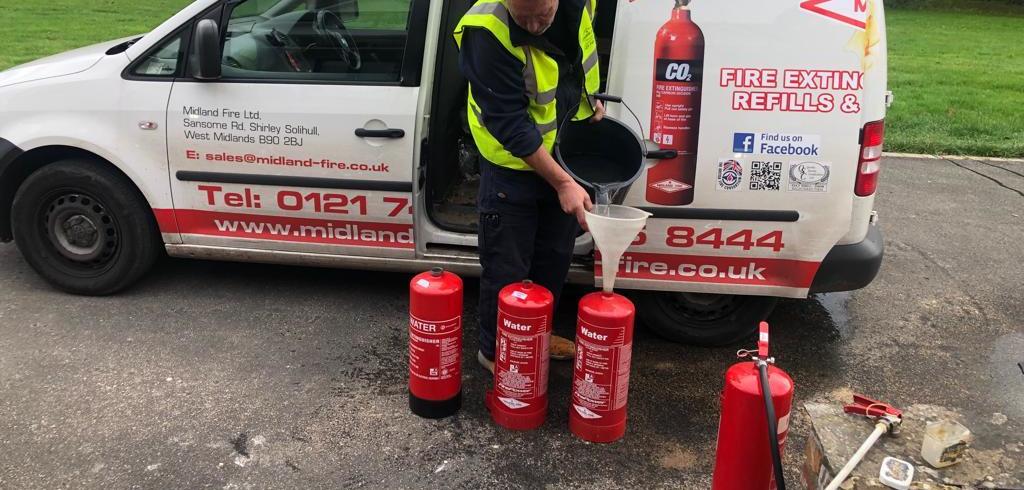
Responsibility for the verification of qualifications is the responsibility of the responsible person. Simply seeing the logo of a company on a van for work or on a website isn't enough.
Verify Online. Verify Online. BAFE and the FIA both have online directories that allow you to find a company's name and confirm the status of its certification. in Derby
Ask for certificates. A legitimate company is happy to provide copies, such as the BAFE SP101 or their FIRAS certificate as well as their insurance certificates. in Derby
Check expiry dates: Be sure that all insurance policies as well as certificates are up-to-date. in Derby
This process of verification is the most effective defense against using an unqualified provider and is a crucial part of demonstrating your own due diligence. See the recommended fire extinguisher service in Derby for more info.